Depending on the full moon of Shukla Paksha (bright lunar fortnight), the Dashain festival occurs in September or October. It is the longest and most anticipated festival in Nepal and even enforces the closure of all government offices, educational institutions, and many businesses in its honor. The most critical days are the first, seventh, eighth, ninth, and tenth days.
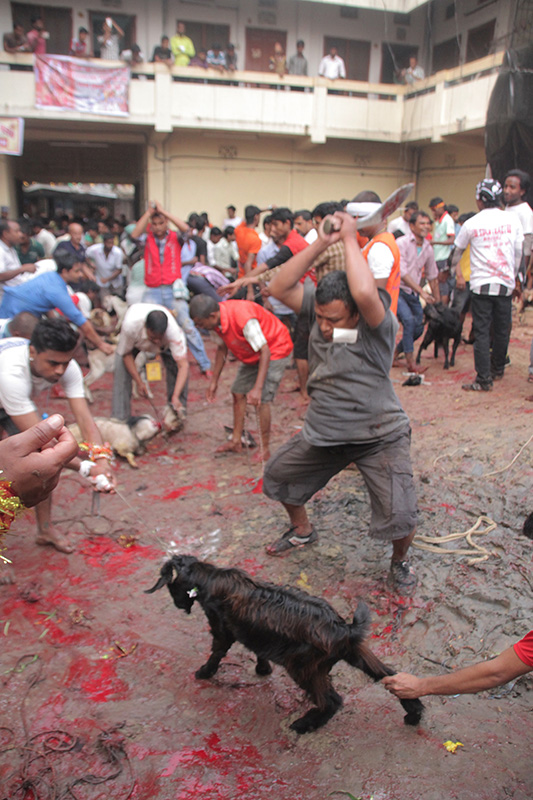
The eighth day, known as the ‘Maha Asthami,’ is the day when the most heightened of the Goddess Durga’s manifestations (known as the blood-thirsty Kali), is appeased through the sacrifice of hundreds of thousands of buffaloes, goats, pigeons and ducks in temples throughout the nation. In these ceremonies, blood is symbolic of its fertility and considered the most honorable offering to the Goddesses.
The sacrifices carrying on throughout the night of this day is called Kal Ratri (Black Night). It is typical for the sacrifice of buffalo to take place in the courtyards of all the land revenue offices in the country on this day. In Nepal’s old palace in Basantapur Hanuman Dhoka, worships and sacrifices are also active throughout this day and night in almost every courtyard.
On the midnight of the very day, the Dasain Ghar, 54 buffaloes, and 54 goats perish in observance of the rites. After the offering of the blood, the flesh of the sacrificed animals is prepared and eaten by the worshippers, believing that it is a blessing of divinity.
The ninth day is called Mahanavami, otherwise referred to as “the great ninth day.” Upon this day, the animal sacrifice ceremonies and rituals are at the highest concentration and of the highest regard where even official military officers participate on holy and royal grounds. Often, the people sacrifice buffalos buffaloes under the order of gun salute. Rituals take place at sacred locations such as the Taleju Temple, where on this day, the only day that the public may enter is one of the most densely populated visit sites.
The Animal Recovery Mission documented Dashain as a part of its efforts to install awareness and education amongst the people of Nepal, the government, and the rest of the world. The goal is to help implement animal protection laws within the country, as well as alternative offerings to the gods and traditions in Nepalese culture that do not result in the mass bloodshed slaughters that have been occurring for centuries.
Please continue to visit this page to learn more about this sacrificial festival. Click on the links to read about the festival from The Himalayan newspaper in Nepal here. For the international report in Nepalese Read here.